Follow Your Nose: Chestnut Stands in Salzburg
As soon as the days turn crisper and Salzburg tucks itself beneath vibrant autumn leaves, a stay at the Wendl Hotels – whether at HOTEL andrä, HOTEL max70, or HOTEL junior – takes on a truly special charm. After a wonderful breakfast, it is time to head out into the city and soak up the autumn weather!
The best way to experience Salzburg’s autumn to the fullest, without missing a thing, starts right here:
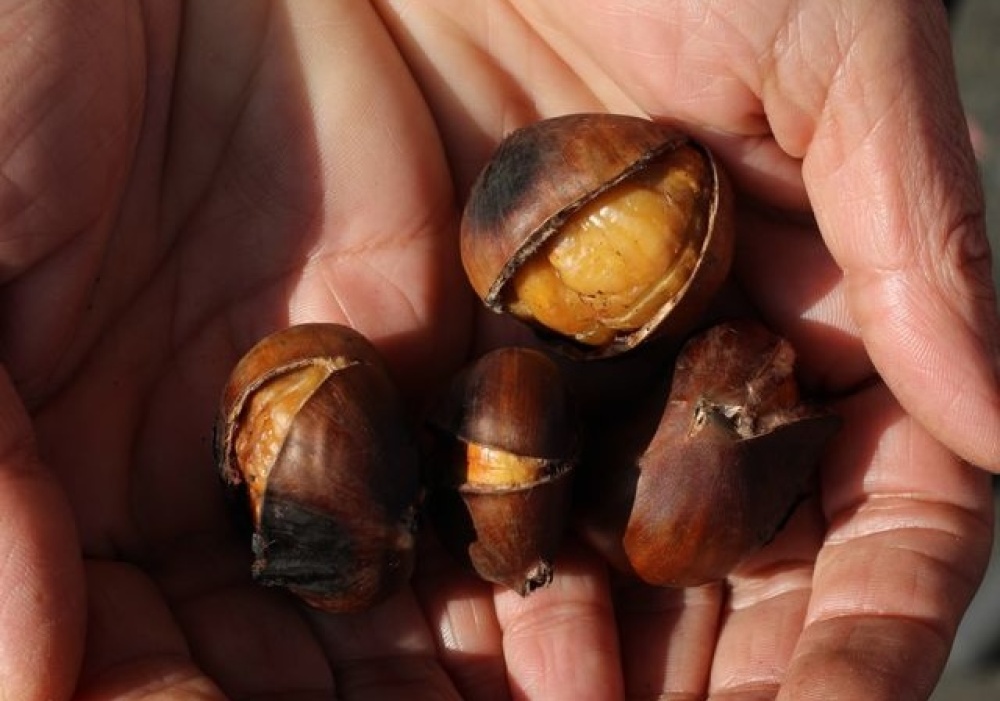
A stroll begins at Leopoldskroner Weiher, leads across the scenic Mönchsberg, and winds down into the historic Old Town. From afar, you will catch a scent unique to these colorful days: the aroma of freshly roasted chestnuts (Maroni), instantly bringing a sense of warmth and comfort.
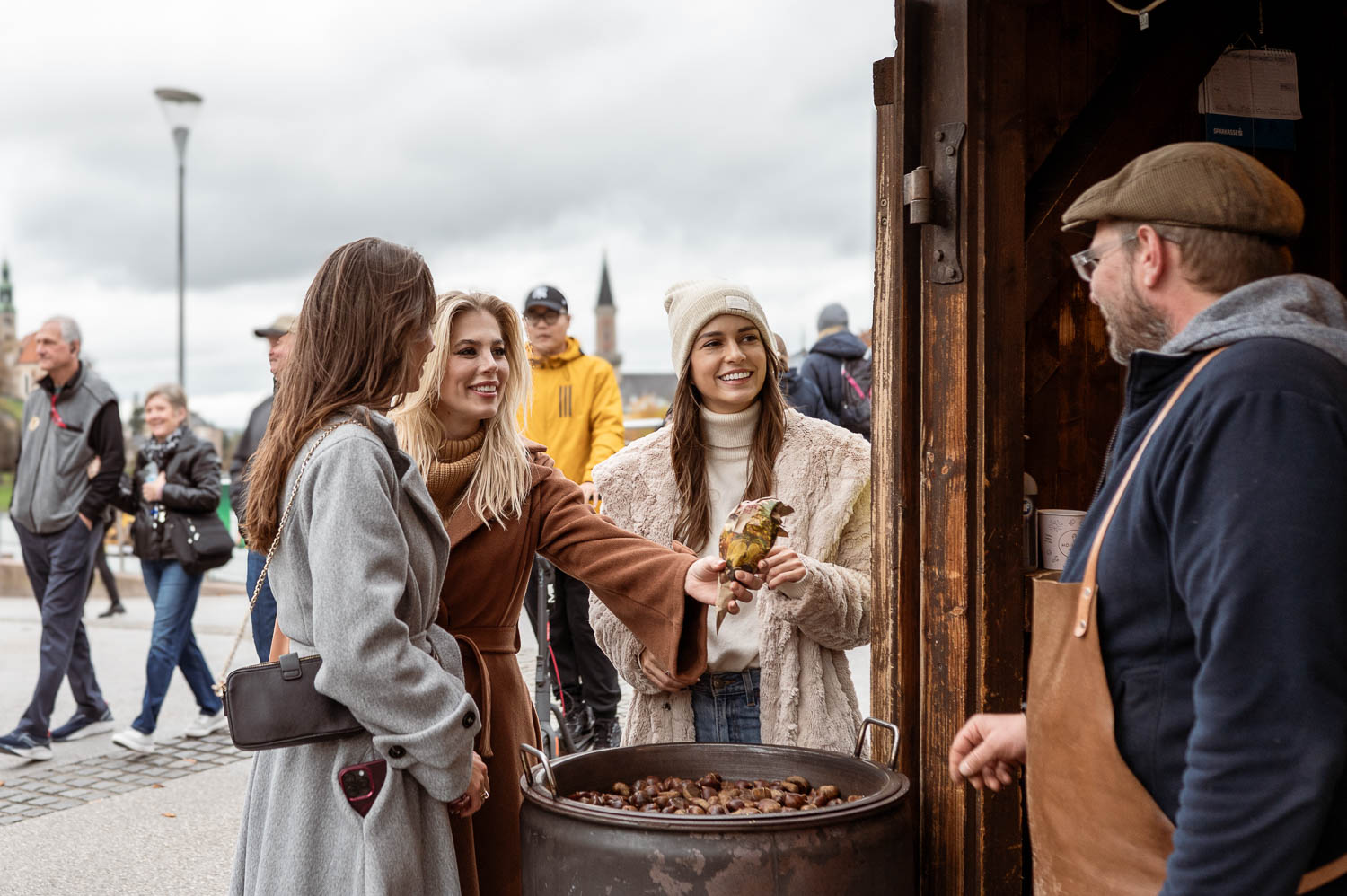
Whether at Anton-Neumayr-Platz, along the Salzach river near Hanuschplatz, or right on Getreidegasse – the traditional roasted chestnut stands are true Salzburg institutions. And honestly: who needs an artificial hand warmer when you can hold a piping-hot paper cone filled with freshly roasted sweet chestnuts to keep you company during your city stroll?
Our Favorite Stands – and the People Behind Them
Hanuschplatz
Our tour kicks off at Hanuschplatz, buzzing with activity from morning until evening. Even so, there is always time for a quick stop at the chestnut stand to warm cold fingers on these hot delicacies.
The Lindenthaler family has been running the stand for two generations, making it a genuine Salzburg staple. For those who simply cannot get enough of the Hanuschplatz chestnuts, they even offer a delivery service: orders of 20 portions or more are delivered right across the city of Salzburg via cargo bike.
The stand is open daily from around 10:00 AM to 7:00 PM, closing only in heavy rain or severe cold.
Chestnuts at Anton-Neumayr-Platz
Another family-run gem is the stand at Anton-Neumayr-Platz, locally known simply as “the stand in front of Republic” – even though Republic has long since closed. No matter!
Expect authentic Italian quality here, and as the owner assures us, every worm-eaten or otherwise inedible chestnut is readily replaced. After all, happy customers keep coming back!
Sheepskin throws on the benches keep you cozy, while the hot chestnuts warm your heart. The stand is open from early November through late February.
The Stand in Front of Mozart’s Birthplace
Right in the heart of Getreidegasse, your craving for hot chestnuts is easily satisfied as well. In various community groups, regulars told us about a stand in front of Mozart’s Birthplace, where fragrant steam rises from the roasting oven and the unmistakable aroma drifts through the historic alley.
Our tip: simply drop by and taste for yourself! Sometimes, it is precisely these little moments of indulgence that turn a city stroll into an unforgettable memory.
A Little Chestnut Trivia for the Road
- Stanitzl: The Austrian term for the small paper cone handed across the counter filled with hot chestnuts.
- Spotting Quality: According to the Austrian Food Code, no more than 20% of chestnuts may be defective. That is why dedicated vendors pay close attention to quality before filling your Stanitzl.
- Hard at Work: At peak times, a chestnut roasting drum can handle around 1,000 chestnuts an hour.
And while you warm your hands on the paper cone: do you know what you are actually holding?
From “Bread of the Poor” to a Salzburg Winter Tradition
What smells of comfort today was once known as the “bread of the poor”. Sweet chestnuts were cultivated as fruit trees nearly 3,000 years ago between the Caspian and Black Seas, arriving in Europe via Asia Minor and Greece. The Romans eventually spread them across their entire empire, all the way to Britain.
During the Middle Ages, chestnuts became a staple food in the mountain valleys of southern Europe, replacing grain wherever crops refused to grow. People ate them fresh, dried, boiled, or roasted, milled them into flour, and baked bread from them. In South Tyrol, it was said that a single chestnut tree could feed an entire family.
And where does the word Maroni come from? As early as the 12th century in Lombardy, the largest, sweetest chestnuts – the ones easiest to peel – were called marroni. Exactly those still end up in your cone today.
The chestnut roasters themselves share a rich history. Many of the first roasters came from Gottschee, a German-speaking linguistic enclave in what is today Slovenia. Because local farmland was barren, residents traveled the region as itinerant merchants. Chestnuts from their homeland were in high demand, and under Empress Maria Theresa in the mid-18th century, they were officially granted permission to sell them.
They roasted over iron drums fired with charcoal, their cry of “Brennhaße Kästen!” (“piping-hot chestnuts!”) echoing through the alleys. Around 1900, Vienna alone was home to roughly 300 chestnut stands.
Today, chestnuts mostly arrive from Italy, and many ovens run on gas rather than charcoal. Yet the feeling remains timeless: a warm paper cone in hand, a chilly nose, and that rich aroma signaling that winter is just around the corner.
Chestnuts at Home
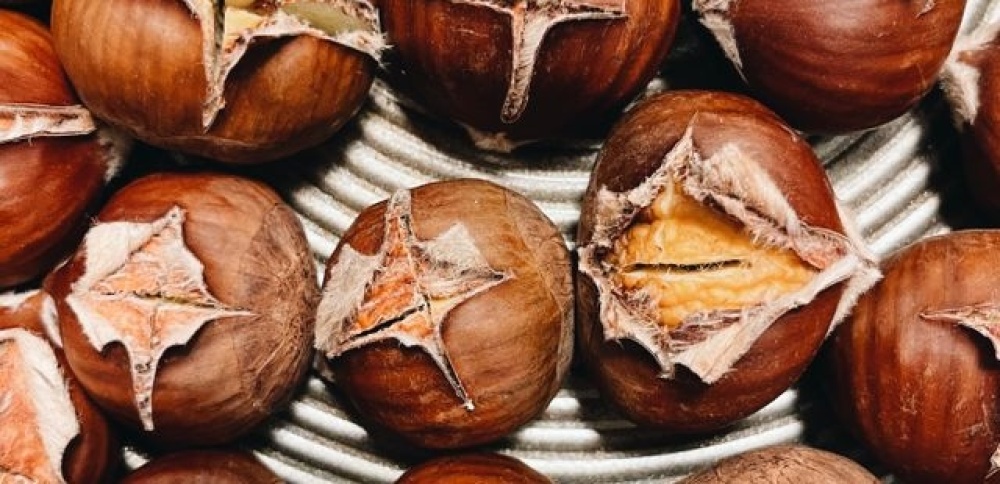
Here is a tip straight from the roasters: score the chestnuts with a crosswise slit on the rounded side and roast them at around 180 °C (350 °F) for roughly half an hour in the oven. Turn them a few times throughout – and your homemade piece of Salzburg autumn is ready to enjoy.
Our Recommendation for Your Stay
Grab your favorite jacket, take a leisurely stroll from the hotel into town, and savor Salzburg’s autumn atmosphere with all your senses!
If you would like to know which chestnut stand is closest to your hotel, simply ask our front desk team.
We wish you wonderful, delightful autumn days in Salzburg!
Your Wendl Hotels Team
Rating
There are no ratings yet, be the first!