


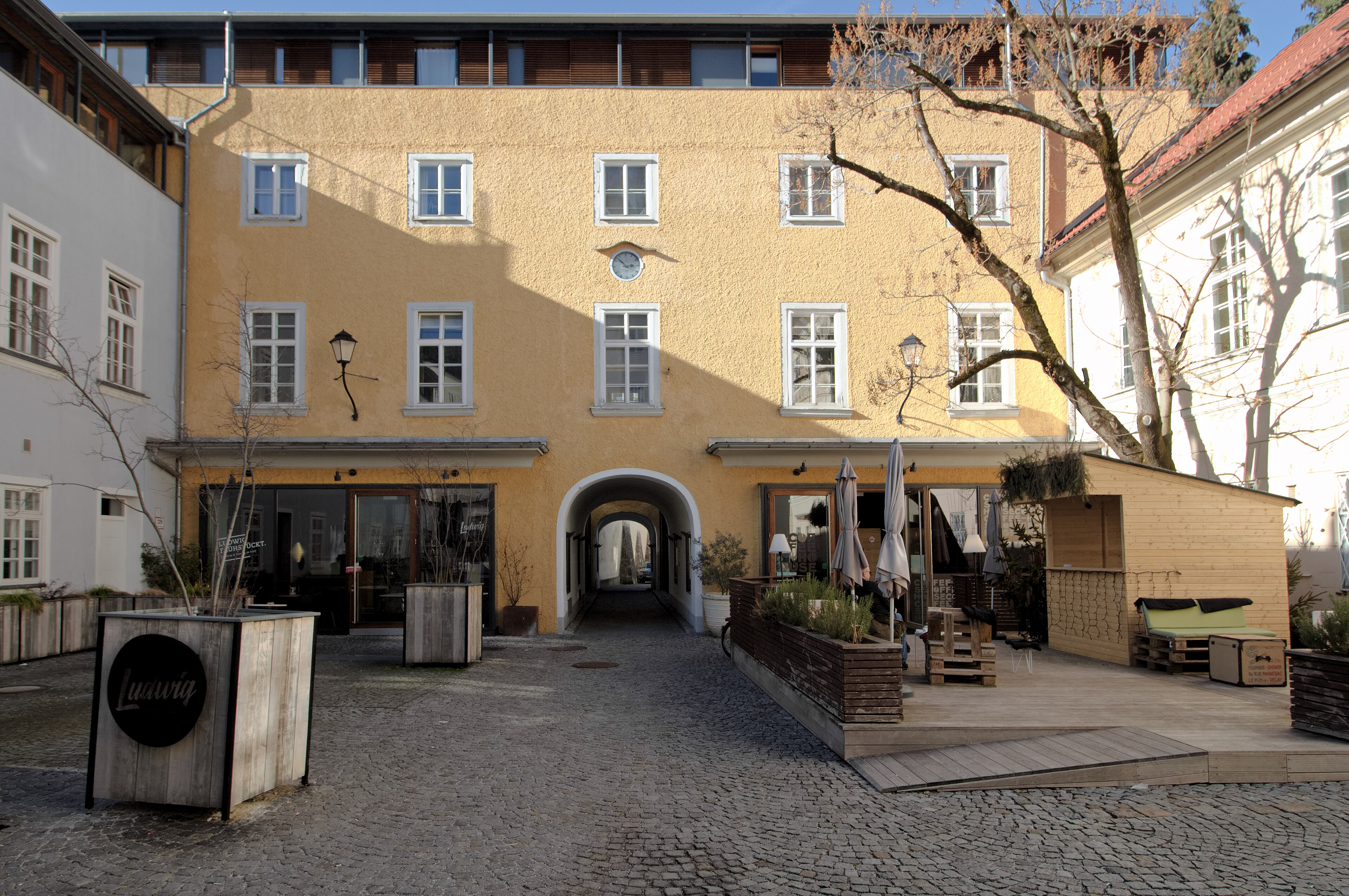
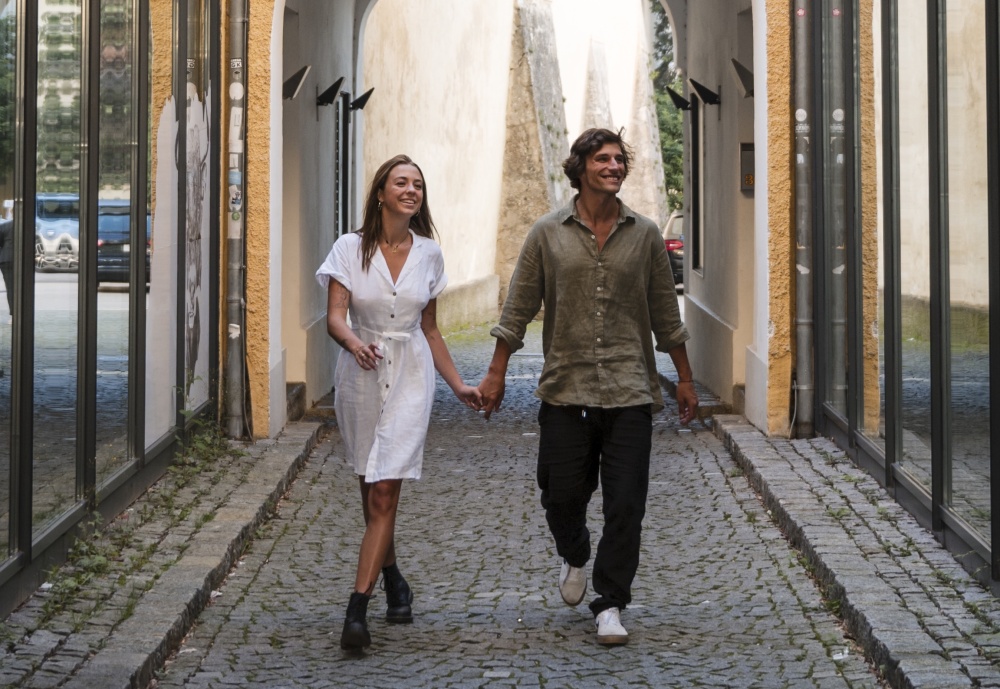
Right in the heart of the Old Town on the right bank, between Linzer Gasse and Paris-Lodron-Straße, lies the Bruderhof—a complex of buildings with a few centuries under its belt. You walk through the Cornelius-Reitsamer-Passage, step under an archway, and you’re already inside: two courtyards, a bit of shade, lively dining, and plenty of history.
Come on in!
Right in the first courtyard and to the right: the former St. Sebastian Hospital, now a guesthouse and student dormitory. Behind it, an entrance to the Sebastian Cemetery—and suddenly it becomes quiet. Very quiet. Because this is where not only a cemetery begins, but a journey through time: Originally, the whole area lay far outside the city walls—back then presumably a plague cemetery, which makes sense, since the patron saint against the plague is none other than St. Sebastian. In 1505, the cemetery was established under Prince-Archbishop Leonhard von Keutschach—at that time still quite “medieval.”
Then came Wolf Dietrich von Raitenau and said, “This must be Renaissance.” And he had the cemetery redesigned in the style of an Italian camposanto. And because he could, he had a burial chapel built right in the middle of it—the Wolf Dietrich Burial Chapel—dedicated to Saint Gabriel. And he was laid to rest there in 1617 in a sarcophagus.
3840
2551
Raffaela
1821
1784
Bruderhof Salzburg - Life and Death, Just a Hair's Breadth Apart
Wolf Dietrich went all out
Inside, the chapel is a bit like a kitschy ceramic dream: eight bold colors in square tiles—like a gigantic mosaic from a vintage Pop Art album. The dome: yellow and blue in small diamonds—very Renaissance, very dramatic.
A deluxe celebrity cemetery
Sebastian Cemetery is surrounded by crypt arcades. And here lies Salzburg’s Who’s Who of the past centuries: Leopold Mozart, Constanze Mozart, Paracelsus—and many other citizens, nobles, and illustrious figures who lived, died, or insisted on being buried here. In short: a cemetery with more stories than many a novel.
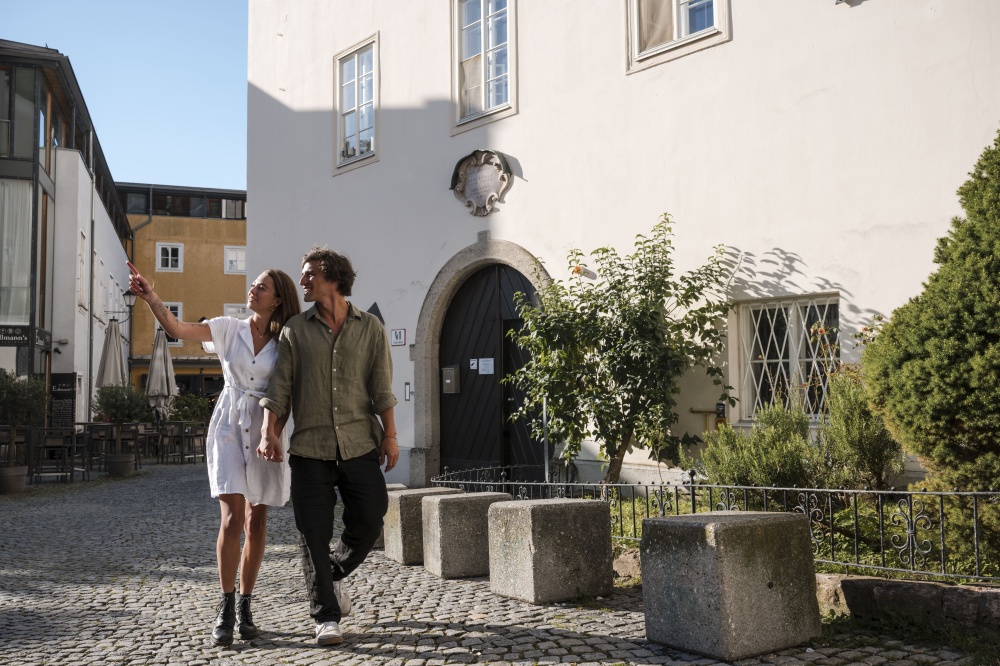
And today? Better to eat than to die.
Since Salzburg can be both macabre and modern, the buildings of the Bruderhof now house
restaurants and cafes. A brasserie and bistro, as well as a burger joint and a coffeehouse-style breakfast- brunch-bar-lounge.
So: first death, then food. Just the Salzburg way.
Header photo: Von Eweht - Eigenes Werk, CC BY-SA 4.0, https://commons.wikimedia.org/w/index.php?curid=78181607
Rating
Article rating is Bruderhof Salzburg - Life and Death, Just a Hair's Breadth Apart
3 out of 2 ratings.
How do you like the article?
